16 min read
Procter & Gamble’s chief executive today is Shailesh Jejurikar, a company veteran since 1989 who succeeded Jon Moeller on January 1, 2026—the first Indian-born CEO in P&G’s 188-year history—and added the chairman’s title on August 1, 2026.
He leads a company that began as a $7,192.24 handshake between two Cincinnati brothers-in-law. Every leader from that partnership to today is below.
LIST OF PROCTER & GAMBLE CEOS & PRESIDENTS OVER THE YEARS
| Leader | Tenure | Defining move |
|---|---|---|
| William Procter & James Gamble | 1837–1890 | Founded the partnership on October 31, 1837 |
| William Alexander Procter | 1890–1907 | First president of the incorporated company |
| William Cooper Procter | 1907–1930 | Eight-hour day, profit-sharing, guaranteed employment |
| Richard R. Deupree | 1930–1948 | Radio serials that coined the “soap opera” |
| Neil H. McElroy | 1948–1957 | Invented brand management; left to run the Pentagon |
| Howard J. Morgens | 1957–1974 | Pampers, Folgers, Crest’s ADA seal, Pringles |
| Edward G. Harness | 1974–1981 | The 1980 Rely recall |
| John G. Smale | 1981–1990 | Richardson-Vicks and Noxell deals; later chaired GM |
| Edwin L. Artzt | 1990–1995 | Took Cover Girl and Max Factor global |
| John E. Pepper | 1995–1999 | Restructuring; later chaired Disney’s board |
| Durk I. Jager | 1999–2000 | 17 months—the shortest tenure in P&G history |
| Alan G. Lafley | 2000–2009, 2013–2015 | The $57 billion Gillette acquisition |
| Robert A. McDonald | 2009–2013 | Later U.S. Secretary of Veterans Affairs |
| David S. Taylor | 2015–2021 | Survived the biggest proxy fight in history |
| Jon R. Moeller | 2021–2026 | Priced P&G through the inflation years |
| Shailesh Jejurikar | 2026–present | First Indian-born CEO; now also chairman |
WILLIAM PROCTER & JAMES GAMBLE (FOUNDERS OF P&G)
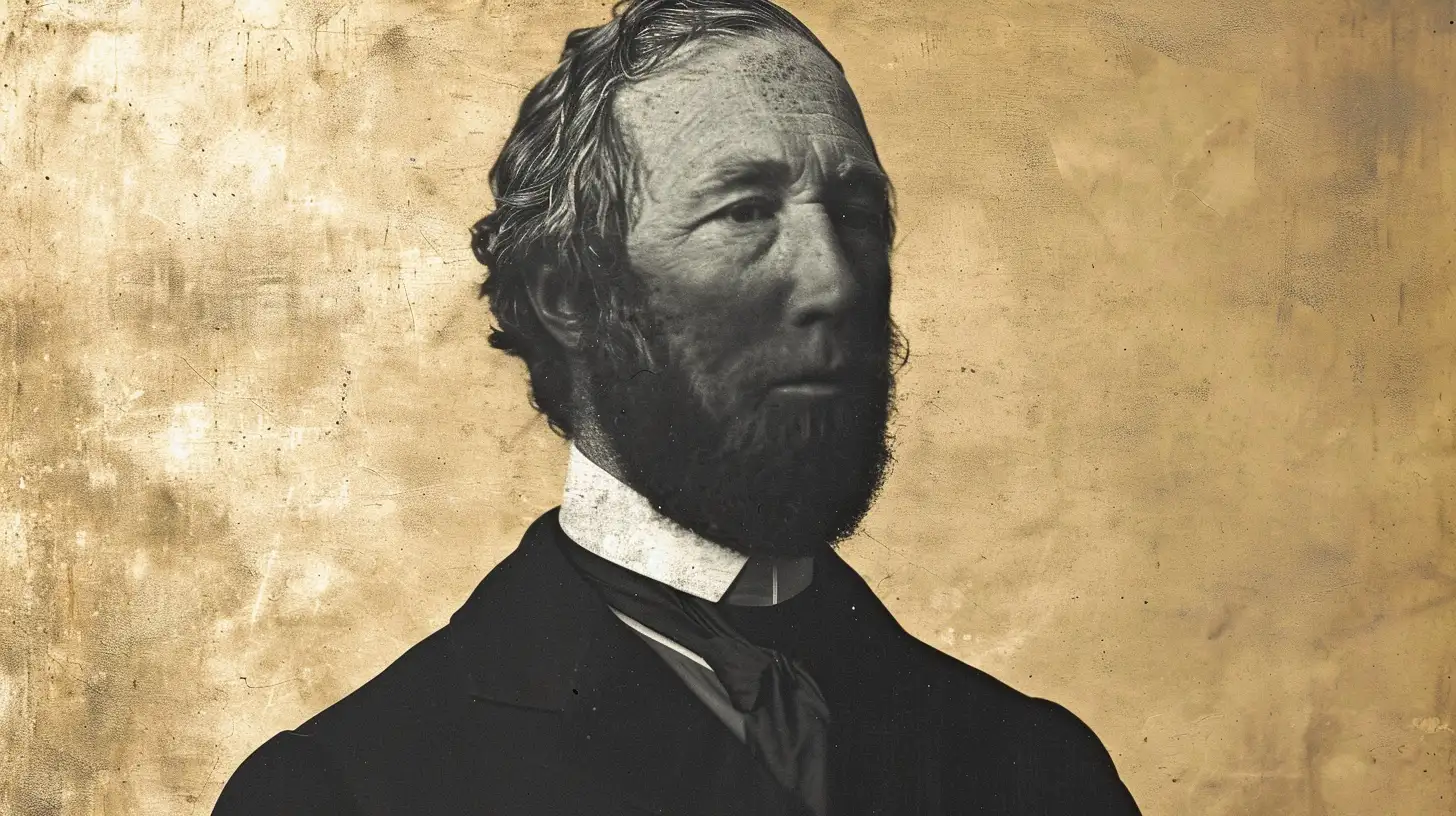
Procter & Gamble began with a partnership agreement signed in Cincinnati on October 31, 1837, backed by exactly $7,192.24 in capital.
William Procter was an English-born candlemaker; James Gamble, born in Ireland, had apprenticed as a soap boiler.
The two were brothers-in-law—married to sisters Olivia and Elizabeth Norris—and it was their father-in-law, Alexander Norris, who pushed them to combine, pointing out that candles and soap competed for the same lye and animal fat.
In the beginning Procter & Gamble manufactured homemade products like candles and soap—the same trade that, a half-century later in England, would build Lever Brothers into what became Unilever.
The tiny venture grew based on hard work and quality products.
The famous products belong to the next generation: founder’s son James Norris Gamble, a trained chemist, developed Ivory Soap in 1879—an 1882 laboratory analysis produced the “99 44/100% Pure” slogan—and Crisco, the first all-vegetable shortening, arrived in 1911, two decades after both founders had died.
What the founders did build was the “P&G way”—a habit of treating brands, employees, and ethics as a single system that every later CEO inherited.
WILLIAM ALEXANDER PROCTER
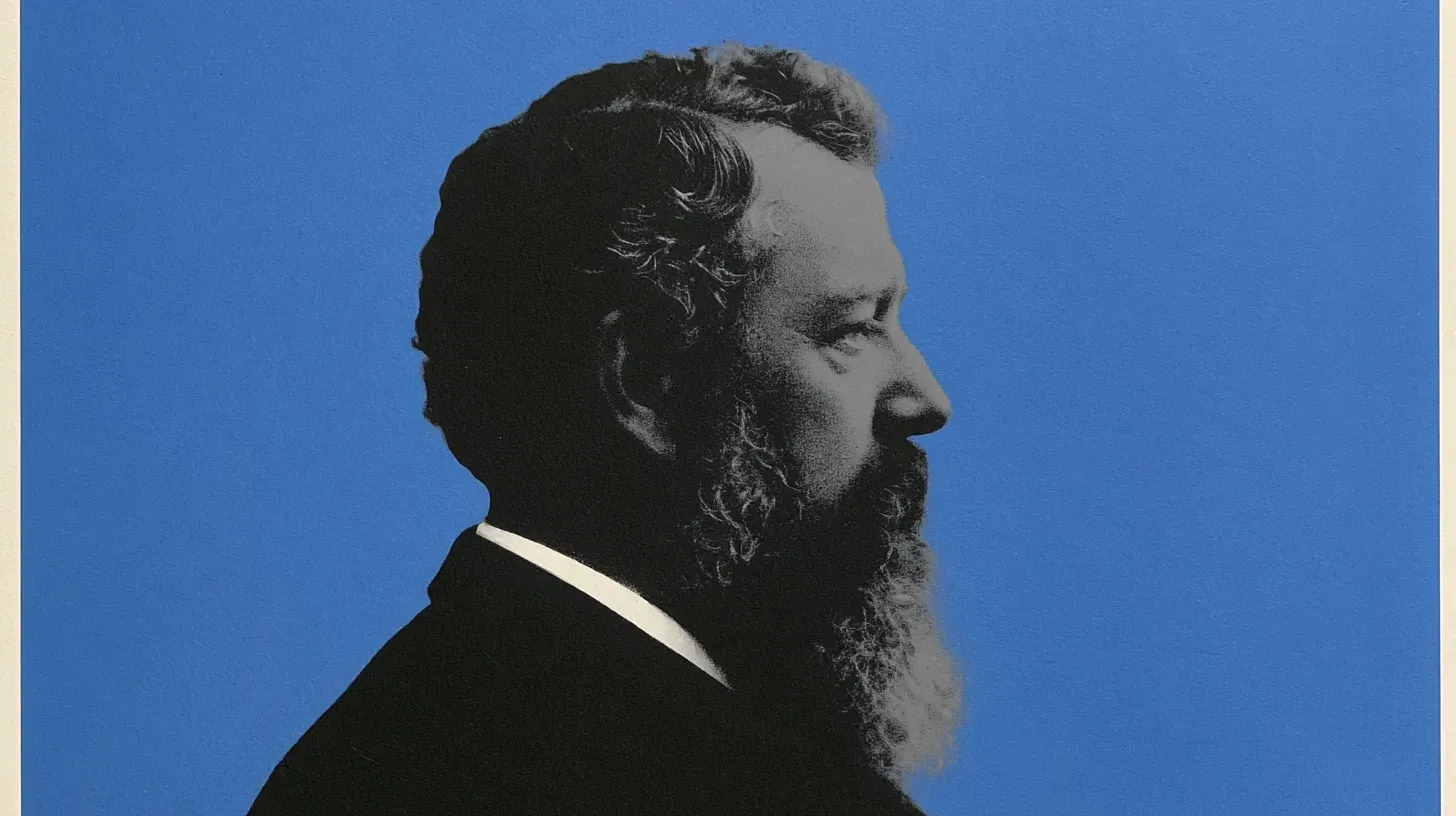
When Procter & Gamble incorporated in 1890, the founder’s son William Alexander Procter became its first president.
His seventeen years in the chair bridged the family soap-and-candle partnership and the modern corporation—while his own son, William Cooper Procter, ran daily operations as general manager.
The presidency ended in tragedy. Procter never recovered from his wife’s death in 1903, and in 1907 he died by suicide, passing the office to his son.
WILLIAM COOPER PROCTER
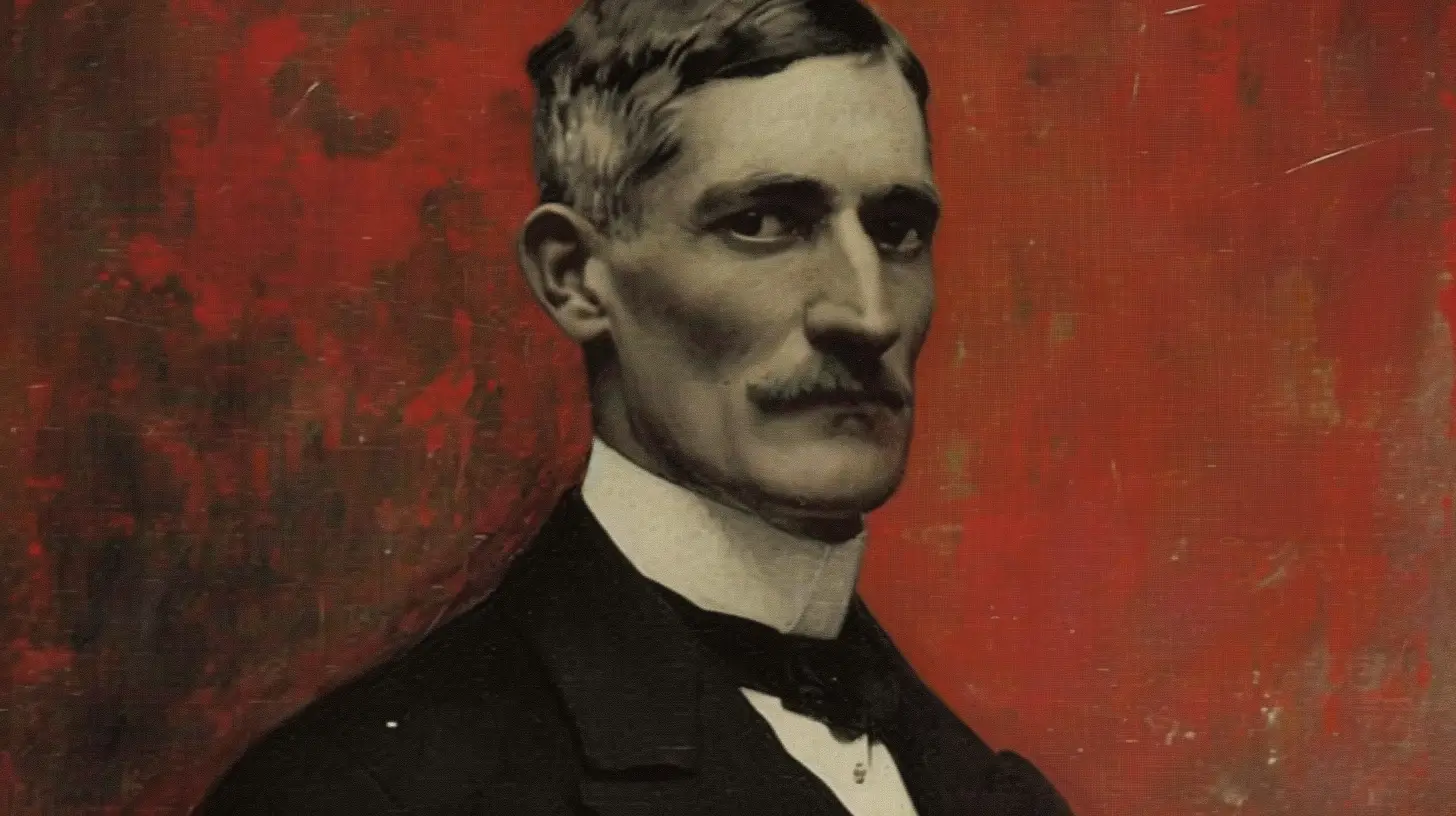
William Cooper Procter, grandson of the founder, was the last member of either family to run the company.
Cooper was known for his progressive management style.
He became General Manager in 1890 and President from 1907 through 1930.
The record backs the reputation: a Saturday half-holiday in 1885, profit-sharing “Dividend Day” in 1887, an employee stock plan in 1892, the eight-hour day in 1918—and in 1923, the nation’s first guaranteed-employment policy, promising workers at least 48 weeks of pay a year.
Though he retired without an heir, Cooper Procter’s legacy endured through the “spiritual inheritance” he imparted to subsequent generations of leadership seeking to uphold the company’s foundational values.
RICHARD R. DEUPREE
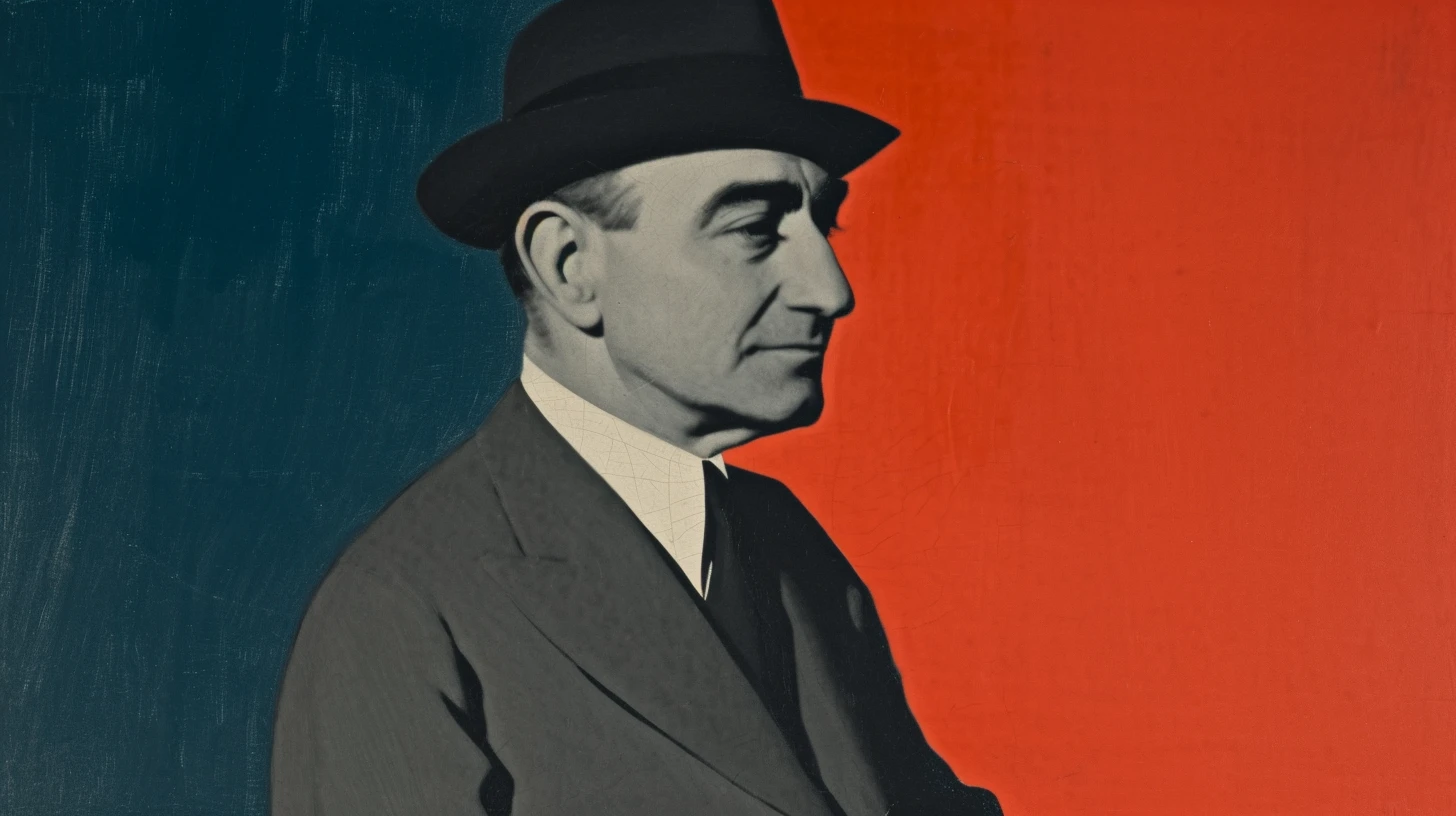
Richard R. Deupree became president in 1930—the first drawn from outside the two founding families—and steered P&G through the Great Depression and World War II until 1948.
His signature bet was radio. P&G put Oxydol’s name on “Ma Perkins” in 1933, the serial drama whose detergent sponsorship made “soap opera” a literal description; by 1939 the company had 21 shows on the air, and Deupree kept the advertising budget intact even when Depression-era shareholders demanded cuts.
When war came, the company’s powder-packing expertise won it an unlikely assignment: the P&G Defense Corporation ran the 28,000-acre Wolf Creek Ordnance Plant in Tennessee, loading artillery shells instead of soap flakes.
Through it all, Deupree sustained Cooper Procter’s employee-welfare programs—including the guaranteed-employment promise—treating the interests of company and workforce as inseparable.
NEIL H. MCELROY
Neil H. McElroy became President and CEO from 1948 to 1957.
His place in business history was already fixed. On May 13, 1931, as a junior ad manager on Camay tired of competing with P&G’s own Ivory, McElroy wrote a three-page memo—deliberately breaking President Deupree’s famous one-page rule—proposing that a single “brand man” own each brand’s results outright. Deupree approved it, and modern brand management was born.
As president he rode the payoff: Tide, launched in 1946 as “The Washday Miracle,” conquered laundry rooms while McElroy moved P&G’s advertising muscle into television.
McElroy also focused on employee retention by implementing benefits and profit-sharing programs.
Then came the strangest exit in P&G history. McElroy left in October 1957 to become Eisenhower’s Secretary of Defense—sworn in five days after Sputnik reached orbit—and answered the crisis by establishing ARPA, the Pentagon’s research agency, in February 1958.
HOWARD J. MORGENS
Assuming the helm from predecessor Neil H. McElroy, Howard J. Morgens stewarded Procter & Gamble through a sustained period of growth and prosperity as President and CEO from 1957 through 1974.
The product record under Morgens reads like a supermarket aisle: Charmin acquired in 1957, Crest winning the American Dental Association’s endorsement in 1960, Folgers coffee in 1963, and Pringles—P&G’s uniform, canister-packed shot at Frito-Lay’s snack empire—in 1967.
The biggest bet arrived quietly in a Peoria, Illinois test market in December 1961: Pampers, invented by P&G engineer Victor Mills, a grandfather unimpressed with cloth diapers. Even the failures were ambitious—two company chemists invented olestra, the calorie-free fat substitute, in 1968.
Regarded as a dutiful custodian of Cooper Procter’s progressive values, Morgens sustained P&G’s foundational belief in “putting people first” through extensive worker training and promotion-from-within policies.
EDWARD G. HARNESS
Assuming the Presidential mantle in the fretful economic climate of the mid-1970s, Edward G. Harness stewarded Procter & Gamble capably as CEO from 1974 through 1981 when rampant stagflation threatened consumer industries.
Though forced to implement austerity measures to offset economic headwinds, Harness sustained investment in P&G’s global business infrastructure while upholding the company’s time-honored values like promotion from within to sustain worker loyalty, morale and productivity.
His defining moment was a retreat. In September 1980, after the CDC linked the ultra-absorbent Rely tampon to toxic shock syndrome, P&G suspended the brand and recalled it nationwide—Harness insisting the company “knows of no defect in the Rely tampon” even as he pulled it, at a reported cost of more than $75 million.
JOHN G. SMALE
John G. Smale had made his name young: as Crest’s brand manager he landed the American Dental Association’s 1960 endorsement, the coup that vaulted the toothpaste past Colgate.
During a period of slowing sales growth, John G. Smale brought transformative change to Procter & Gamble as Chairman and CEO throughout the 1980s.
Smale spearheaded a sweeping reorganization centered around streamlining brands and decentralizing business units.
He also bought P&G into new aisles—Richardson-Vicks for $1.2 billion in 1985, then Noxell, maker of Cover Girl, in a $1.3 billion stock deal in 1989.
Smale’s structural changes helped to improve sales and established a solid foundation for the years to come—as did the unprecedented data-sharing partnership his team struck with Sam Walton’s fast-growing Walmart in the late 1980s.
Retirement brought a harder chair: after the 1992 boardroom coup at General Motors, Smale served as GM’s non-executive chairman from 1992 to 1995.
EDWIN L. ARTZT
The ‘90s were competitive with new household and personal care products hitting the market—Edwin L. Artzt confronted the challenge directly as CEO from 1990 through 1995 by prioritizing lower costs and higher quality.
Inside the company they called him “the Prince of Darkness”—a nickname Artzt insisted referred to his late-night work habits rather than his temper.
He pushed Cover Girl and Max Factor onto shelves worldwide and kept the acquisition machine running—Hawaiian Punch came aboard from Del Monte on his watch.
His zeal had a darker edge, too: in 1991 P&G persuaded Cincinnati authorities to subpoena phone records in a hunt for the source behind a Wall Street Journal reporter’s stories—a privacy scandal that shadowed the company for years.
Artzt’s incentives positioned P&G advantageously for continued growth and global expansion.
JOHN E. PEPPER
John E. Pepper became CEO of the consumer goods giant in 1995.
He implemented extensive restructuring and downsizing—painful but necessary to streamline operations—while hewing to the principle of “doing the right thing” in his handling of job reductions.
Pepper handed the CEO title to Durk Jager in January 1999, then returned as chairman from 2000 to 2002 to steady the company after Jager’s ouster—and later chaired the Walt Disney Company’s board from 2007 to 2012.
DURK I. JAGER
Assuming command in 1999 intent on accelerating growth and innovation, Durk I. Jager’s bold vision to reorganize Procter & Gamble instead brought 17 months of turbulence and declining market share that culminated in his abrupt dismissal in 2000.
The bottom fell out on March 7, 2000, when a profit warning knocked P&G shares down roughly 31 percent in a single day; by the time Jager resigned that June, some $75 billion in market value had evaporated since January. His 17 months remain the shortest CEO tenure in company history.
Seeking to impose his “Organization 2005” structure of global business units, Jager alienated P&G’s traditional brand managers and lost focus on core US markets; when confidence collapsed, John Pepper returned as chairman while A.G. Lafley took the CEO job.
Though brief, Jager’s unsuccessful tenure brought constructive change through hard lessons on the risks of overly rapid transformation without first securing organization-wide buy-in.
ALAN G. LAFLEY
Inheriting command amid sagging morale and competitive struggles in 2000, Alan G. Lafley engineered a remarkable multi-year turnaround as President & CEO until 2009 through a renewed focus on P&G’s core strengths and consumers.
His biggest swing came on January 28, 2005: the $57 billion acquisition of Gillette, still the largest deal in P&G history. Across his first tenure, sales roughly doubled—from about $40 billion to $79 billion.
Harnessing the company’s innovation capabilities behind blockbuster launches like Swiffer and Febreze while expanding aggressively into emerging markets, he drove P&G to its longest stretch of sales and profit growth despite the financial crisis.
Restoring flagging employee confidence in his first tenure through people-centric values, Lafley was called back to helm P&G again from 2013-2015 to solidify hard fought gains in a period of austerity and consolidation across the global consumer industry.
The second tour produced the great brand cull: an August 2014 plan to shed roughly 100 brands and keep the 65 or so that generated 95 percent of profit—the leaner portfolio his successors still run today.
ROBERT A. MCDONALD
Robert A. McDonald succeeded Alan G. Lafley as President and CEO in 2009, bringing 33 years of P&G experience including leadership roles across international markets.
A West Point graduate in the top 2 percent of his class who had jumped with the 82nd Airborne, McDonald set a goal of reaching one billion new consumers and delivered steady organic sales growth. The company’s stock price rose roughly 60 percent under his leadership, from $51.10 to $81.64.
McDonald faced mounting pressure from activist investors, particularly Bill Ackman—the same financier who had just installed Ron Johnson atop JCPenney—over profit margins and market share concerns. In 2013, he stepped down and was replaced by returning CEO Alan G. Lafley.
Washington wasn’t through with him: in 2014 President Obama nominated McDonald as Secretary of Veterans Affairs—confirmed unanimously—and he ran the VA until 2017.
DAVID S. TAYLOR
Rising up through the corporate ranks to CEO in 2015, David S. Taylor stewarded Procter & Gamble capably through a period of industry consolidation and economic shocks like the COVID-19 pandemic.
His trial by fire came in 2017, when Nelson Peltz’s Trian Fund launched the largest proxy fight in corporate history. P&G declared a razor-thin victory at the October annual meeting, Peltz refused to concede—and joined the board anyway in March 2018.
Taylor also absorbed the bill for the Gillette bet: an $8 billion non-cash writedown in 2019, as currency swings and shrinking shaving habits caught up with the 2005 price tag.
When COVID-19 emptied store shelves in 2020, the leaner 65-brand portfolio he had finished assembling delivered some of P&G’s strongest demand in decades—the position of strength he handed to his CFO, Jon Moeller.
JON R. MOELLER
Jon R. Moeller—P&G’s chief financial officer since 2009—became CEO on November 1, 2021, walking straight into the worst inflation in four decades.
His answer was pricing power. P&G pushed through repeated price increases and consumers largely paid them, driving organic sales growth of roughly 7 percent in fiscal 2022 and 2023 before growth cooled to about 2 percent by fiscal 2025.
Moeller handed the CEO job to Shailesh Jejurikar on January 1, 2026, served seven months as executive chairman, and retired on August 14, 2026, closing a 38-year P&G career.
SHAILESH JEJURIKAR
Shailesh Jejurikar became P&G’s chief executive on January 1, 2026—elected on July 28, 2025 as the first Indian-born CEO in the company’s history—and added chairman of the board on August 1, 2026.
Born in Mumbai and holding an MBA from the Indian Institute of Management Lucknow, he joined P&G in India in 1989 and rose to run Fabric & Home Care—the roughly $30 billion Tide, Downy, Febreze and Swiffer portfolio—before becoming chief operating officer in 2021.
He inherits a restructuring he helped present: a June 2025 plan to cut up to 7,000 non-manufacturing jobs—about 15 percent of that workforce—exit weaker brands and markets, and absorb an estimated $600 million tariff bill in fiscal 2026.
PROCTER & GAMBLE CEO FAQ
How much does the CEO of P&G make?
Jon Moeller earned $21.9 million in total compensation in P&G’s fiscal 2025—a $1.6 million salary plus stock and option awards—about $1 million less than the year before. Shailesh Jejurikar’s CEO package starts at a $1.6 million base salary, a bonus targeted at 200 percent of salary, and $14 million in long-term equity.
Who owns most of Procter & Gamble?
Institutional investors own roughly two-thirds of P&G. Vanguard is the largest single shareholder at about 9.7 percent, followed by BlackRock near 6.8 percent and State Street around 4.4 percent. No founding-family stake remains—company insiders together hold less than 1 percent of the shares.
What nationality is Shailesh Jejurikar?
Jejurikar is Indian-American. Born in Mumbai and educated at Mumbai University and the Indian Institute of Management Lucknow, he joined P&G in India in 1989 and built his career across its global businesses. He is the first Indian-born—and first Asian-born—chief executive in P&G’s history.
Why is P&G cutting jobs?
P&G announced in June 2025 that it would cut up to 7,000 non-manufacturing jobs—about 15 percent of that workforce—over two years while exiting some smaller brands and markets. The company cited slowing sales growth and an estimated $600 million tariff hit in fiscal 2026 as the pressure behind the plan.