20 min read
The most famous exorcism in history is the 1949 Roland Doe case—the month-long Jesuit ritual in St. Louis that inspired The Exorcist. The most infamous is Anneliese Michel’s, because it killed her. The 25 cases below span four centuries and five continents, from a laywoman wielding a martyr’s rib in New France to a televised rite watched by 29 million Americans—each one documented, several of them fatal, and more than a few of them debunked.
| # | Case | Year | Place | Outcome |
|---|---|---|---|---|
| 1 | Anneliese Michel | 1975–76 | Klingenberg, Germany | Died July 1, 1976; four convicted of negligent homicide |
| 2 | Roland Doe | 1949 | Maryland / St. Louis | Survived; named as Ronald Hunkeler in 2021 |
| 3 | Clara Germana Cele | 1906 | Natal, South Africa | Survived two rites |
| 4 | Emma Schmidt | 1928 | Earling, Iowa | Survived 23 ritual days across three sessions |
| 5 | George Lukins | 1788 | Bristol, England | Declared cured |
| 6 | The Loudun nuns | 1632–34 | Loudun, France | Urbain Grandier burned at the stake |
| 7 | Arne Cheyenne Johnson | 1981 | Brookfield, Connecticut | Convicted of first-degree manslaughter |
| 8 | Michael Taylor | 1974 | Gawber, England | Killed his wife; insanity verdict |
| 9 | The Smurl family | 1980s | West Pittston, Pennsylvania | Three failed rites; claims never verified |
| 10 | The Perron family | 1970s | Harrisville, Rhode Island | Séance went wrong; no exorcism ever held |
| 11 | Trujillo & Varela | 1764 | Abiquiú, New Mexico | Outbreak faded; recorded in a friar’s letter |
| 12 | Barbe Hallay | 1662 | Beauport, New France | Recovered |
| 13 | ”Gina” | 1991 | Palm Beach, Florida | Televised on ABC’s 20/20 |
| 14 | ”Julia” | 2008 | USA | Published by psychiatrist Richard Gallagher |
| 15 | Gottliebin Dittus | 1841–43 | Möttlingen, Germany | Recovered after two years |
| 16 | Salvador Dalí | 1947 | France | Story unconfirmed; sculpture surfaced 2005 |
| 17 | Elizabeth Knapp | 1671–72 | Groton, Massachusetts | Recovered after prayer and fasting |
| 18 | David Berkowitz | 1976–77 | New York City | Possession claim only; later called a hoax |
| 19 | Maricica Irina Cornici | 2005 | Tanacu, Romania | Died; priest and four nuns convicted |
| 20 | Susan Kay Clark | 2008 | Odessa, Texas | Died; husband sentenced to life |
| 21 | Kyung Jae Chung | 1996 | Los Angeles, California | Died; three convicted |
| 22 | Terrance Cottrell Jr. | 2003 | Milwaukee, Wisconsin | Died; pastor convicted of felony child abuse |
| 23 | Zakieya Avery’s children | 2014 | Germantown, Maryland | Two children killed; both women committed |
| 24 | Amora Bain Carson | 2008 | Rusk County, Texas | Died; killer executed in 2025 |
| 25 | Maxi Castro | 2013 | Pelanwatte, Sri Lanka | The exorcist himself died |
ANNELIESE MICHEL (GERMANY, 1976)
Anneliese Michel was a 23-year-old German student who underwent 67 exorcism rites in ten months, dying of starvation and dehydration on July 1, 1976—the day after the final session. She allegedly barked, ate insects, and spoke as six demons, Hitler and Judas Iscariot among them. Courts had a different diagnosis: doctors had documented her temporal lobe epilepsy since 1969, and in 1978 her parents and both priests were convicted of negligent homicide.
ROLAND DOE (USA, 1949)
The Roland Doe case of 1949 inspired The Exorcist. The story goes that a 13-year-old Maryland boy exhibited levitation, supernatural strength, and guttural voices. Scratches spelling “LOUIS” appeared on his body, prompting a month-long ritual by Jesuit priests in St. Louis that ended April 18, 1949.
For 72 years nobody knew who the boy was. In 2021, Skeptical Inquirer named him as Ronald Edwin Hunkeler—an engineer who spent roughly four decades at NASA’s Goddard Space Flight Center and had died the year before. A longtime colleague said Hunkeler left his house every Halloween, afraid someone would come looking for the boy from The Exorcist.
The skeptics got there first. Investigator Mark Opsasnick tracked down childhood neighbors who remembered a clever prankster, not a demoniac, and Father Walter Halloran—who held the boy down during the rites—declined to vouch for a single supernatural event, admitting no one ever checked the boy’s fingernails when the scratches appeared.
CLARA GERMANA CELE (SOUTH AFRICA, 1906)
In 1906, Clara Germana Cele, a 16-year-old orphan at a Natal mission school, reportedly levitated five feet, spoke Polish and French—languages she had never learned—and stretched her limbs unnaturally. Mission accounts claim some 170 witnesses saw the rites, during which she hurled nuns across the room and nearly strangled a priest with his own stole. When the symptoms returned in 1907, Cele requested the second exorcism herself.
EMMA SCHMIDT/ANNA ECKLUND (USA, 1928)
Emma Schmidt, a 46-year-old Iowa woman, endured 23 days of exorcism at a Franciscan convent in Earling, Iowa—not in one stretch, but across three sessions in August, September, and December 1928. The account says she vomited “impossible quantities” of macaroni and tea leaves, levitated from her bed, and named her possessors: Beelzebub, Judas, her abusive father Jacob, and his mistress Mina. The rite ended December 23 with the words witnesses recorded as her own: “My Jesus! Mercy!”
America’s most documented exorcism was also its best marketed. Capuchin friar Theophilus Riesinger led the rites; pastor Joseph Steiger hosted them; and a 1935 pamphlet, Begone Satan!, turned the whole affair into a national sensation once Time magazine covered it in 1936. “Anna Ecklund” was the pamphlet’s pseudonym—Emma Schmidt was her real name, though researchers still dispute what became of her, with candidate death records as far apart as 1941 and 1964. Nearly a century later, Hollywood came back for the story: The Ritual (2025) cast Al Pacino as Riesinger.
GEORGE LUKINS (ENGLAND, 1788)
Known as the “Yatton Demoniac,” tailor George Lukins sang the Te Deum backward, convulsed violently, and insisted his seven demons could only be expelled by seven clergymen. He got them: vicar Joseph Easterbrook plus six Methodist ministers gathered in the vestry of Bristol’s Temple Church on Friday, June 13, 1788—a genuine Friday the 13th—and declared him cured.
THE LOUDUN NUNS (FRANCE, 1632–1634)
Beginning in 1632, a convent of Ursuline nuns accused priest Urbain Grandier of bewitching them, displaying public fits, levitation, and blasphemies—their prioress had never even met the man. Grandier had also mocked Cardinal Richelieu and opposed his plan to demolish Loudun’s walls, which historians consider the real crime. He was burned at the stake in 1634 after prosecutors produced a “devil’s pact” written in mirrored Latin and signed by Satan, Leviathan, and Astaroth—a document historians describe as an obvious forgery.
ARNE CHEYENNE JOHNSON (USA, 1981)
The “Devil Made Me Do It” case. In 1981, Arne Cheyenne Johnson killed his landlord Alan Bono in Brookfield, Connecticut, after allegedly absorbing a demon during the exorcism of his fiancée’s 11-year-old brother, David Glatzel. His lawyer planned America’s first demonic-possession defense—but the judge barred it before the jury ever heard the word, and Johnson was convicted of first-degree manslaughter, serving about five years of a 10-to-20-year sentence.
MICHAEL TAYLOR (ENGLAND, 1974)
After an all-night exorcism at a church near Barnsley cast out “at least forty demons”—but left three, clergy admitted, still inside him—Michael Taylor went home to Ossett and murdered his wife Christine in October 1974, tearing out her eyes and tongue and strangling the family poodle. A jury found him not guilty by reason of insanity. He spent two years in Broadmoor and two more in a secure ward before being released.
THE SMURL POLTERGEIST (USA, 1980S)

The Smurl family of West Pittston, Pennsylvania claimed a demon haunted their home through the 1980s—assaulting them in their sleep and hurling their dog against walls. Paranormal investigators Ed and Lorraine Warren took up the case and arranged three exorcisms by clergy, all of which the family said failed. Skeptics were blunter: CSICOP chairman Paul Kurtz called the whole affair “a hoax, a charade, a ghost story.”
PERRON FAMILY HAUNTING (USA, 1970S)
The Perron family haunting of 1970s Harrisville, Rhode Island inspired The Conjuring. The family reported apparitions, physical attacks, and—during a séance led by Lorraine Warren—the violent possession of matriarch Carolyn Perron. No exorcism ever took place: by the Warrens’ own account, the family wasn’t religious enough to qualify for one, and the séance went badly enough that father Roger Perron threw the investigators out.
MARÍA TRUJILLO & FRANCISCA VARELA (NEW MEXICO, 1764)
In 1764, in the genízaro settlement of Abiquiú, New Mexico—a community of Hispanicized Indigenous people—María Trujillo’s post-childbirth sickness was blamed on witchcraft, and a possession outbreak followed. Fray Juan José de Toledo’s letter to the Inquisition’s delegate records the exorcisms: Francisca Varela heard phantom pigs, convulsed, cursed the priest’s lineage, and reportedly threw a shoe at him mid-rite. Historians now read the decade-long outbreak as resistance to forced conversion dressed in the Church’s own vocabulary of witchcraft accusations.
BARBE HALLAY (CANADA, 1662)
A laywoman, Marie Regnouard, exorcised her teenage servant Barbe Hallay in 1662 at Beauport, New France, pressing a rib bone of the martyred Jesuit Jean de Brébeuf against the possessed girl. Hallay’s demon allegedly fled through her mouth—expelled not by a priest with the Roman ritual, but by her employer improvising with a relic.
TELEVISED EXORCISM OF GINA (USA, 1991)
On April 5, 1991, ABC’s 20/20 aired footage of a six-hour exorcism performed on a 16-year-old girl called Gina in a Palm Beach, Florida chapel—cut to a 26-minute segment that drew roughly 29 million viewers. Strapped to a chair, she growled, cursed, and babbled; the priests claimed she nearly levitated. Critics inside the Church called the broadcast indefensible—exorcism, they argued, was never meant for prime time.
JULIA (USA, 2008)
In 2008, psychiatrist Richard Gallagher published the case of “Julia,” a self-described satanic high priestess whose exorcism team reported her speaking unknown languages, revealing hidden details of strangers’ deaths—including the exact cancer that killed one team member’s relative—and sending objects flying off shelves. Gallagher, a board-certified psychiatrist who has evaluated hundreds of claimed possessions, called hers one of the very few he couldn’t explain.
GOTTLIEBIN DITTUS (GERMANY, 1843)
Pastor Johann Christoph Blumhardt spent roughly two years, from 1841 to 1843, battling the affliction of Gottliebin Dittus in Möttlingen, Germany—a woman who convulsed, vomited sand, glass, and nails, and was tormented by what Blumhardt described as fallen angels. The fight ended at 2 a.m. on December 28, 1843, when the cry “Jesus ist Sieger!”—Jesus is victor—erupted through her sister Katharina. The phrase became Blumhardt’s lifelong motto.
SALVADOR DALÍ’S EXORCISM (FRANCE, 1947)
Salvador Dalí, the surrealist showman, allegedly underwent an exorcism in France in 1947 at the hands of Italian friar Gabriele Maria Berardi. The evidence is a thank-you gift: a small wood sculpture of Christ on the cross, found among Berardi’s belongings in 2005, two decades after the friar’s death. No document confirms the rite ever happened—the entire story rests on Berardi’s own account and an art attribution experts would only call plausible.
ELIZABETH KNAPP (USA, 1671)
In 1671, Elizabeth Knapp, a 16-year-old servant in the household of Groton minister Samuel Willard, fell into fits of blasphemous speech, violent contortions, and—per Willard’s own account—a tongue drawn out to inhuman lengths. There was no exorcism: Puritans rejected the Catholic rite as popish superstition, so Willard fought back with prayer, fasting, and theological argument, documenting every episode. Two decades later, the same afflictions in younger girls would ignite the Salem witch trials.
DAVID BERKOWITZ (SON OF SAM) (USA, 1976)
Serial killer David Berkowitz claimed a demon spoke through Harvey, his neighbor Sam Carr’s black Labrador, commanding the 1976–77 murders that terrorized New York—“Son of Sam” meant Carr, not the dog. No exorcism was ever performed; this one is a possession claim only. Berkowitz admitted to FBI interviewers in 1979 that he’d invented the demon story with an insanity defense in mind, borrowing the material from The Exorcist.
MARICICA IRINA CORNICI (ROMANIA, 2005)
Maricica Irina Cornici, a young Romanian nun, died in June 2005 during an exorcism at the Tanacu monastery—chained to a cross, gagged with a towel, and denied food and water for three days. Her priest claimed she was “rejecting the cross”; the autopsy said dehydration, exhaustion, and suffocation. Father Daniel Corogeanu drew 14 years, cut to seven on appeal; his four assisting nuns received five to eight.
SUSAN KAY CLARK (USA, 2008)
Susan Kay Clark of Odessa, Texas was suffocated by her husband during a do-it-yourself exorcism in 2008. Jan David Clark wrapped her body in a sheet and laid a cross and a sword on top, telling deputies the demon had left her and entered him. A jury sentenced him to life in prison.
KYUNG JAE CHUNG (USA, 1996)
In 1996, Kyung Jae Chung, a 53-year-old mother of two, died in a Los Angeles condominium during an hours-long Korean ansu kido “demon-expelling” ritual performed by her husband, a visiting missionary, and a church deacon. Sixteen of her ribs were fractured and her heart was crushed by the pressing and stomping. All three men were convicted; the missionary who led the ritual served four years for involuntary manslaughter.
TERRANCE COTTRELL JR. (USA, 2003)
Terrance Cottrell Jr., an autistic eight-year-old, suffocated in 2003 when members of a Milwaukee storefront church pinned him down during a deliverance service meant to expel the demons they blamed for his autism—the pastor lay across the boy’s chest for nearly two hours. The medical examiner ruled mechanical asphyxia. Pastor Ray Hemphill was convicted of felony child abuse and sentenced to 30 months.
ZAKIEYA AVERY’S CHILDREN (USA, 2014)
In 2014, Zakieya Avery of Germantown, Maryland stabbed her four children, killing the two youngest—ages one and two—convinced that demons had entered them. Avery and Monifa Sanford, who called themselves “demon assassins,” were both found not criminally responsible by reason of insanity and committed indefinitely to psychiatric hospitals.
AMORA BAIN CARSON (USA, 2008)
Amora Bain Carson, a 13-month-old Texas girl, was beaten and bitten more than twenty times in a 2008 “exorcism” by her mother and her mother’s boyfriend, who claimed the baby was possessed. Her injuries were so extensive the medical examiner couldn’t isolate a single fatal blow. Jessica Carson is serving life without parole; Blaine Milam was executed in September 2025 after fifteen years on death row.
MAXI CASTRO (SRI LANKA, 2013)
In 2013, Sri Lankan exorcist Maxi Castro had himself buried alive with a sword in the village of Pelanwatte, planning to battle the “evil ashes” cursing a schoolteacher’s home and signal victory by pushing the blade up through the soil. Per the AFP wire report, villagers dug the 32-year-old out unconscious after three hours; he never revived. He is the only entry on this list where the exorcism killed the exorcist.
THE MOST FAMOUS EXORCISTS IN HISTORY
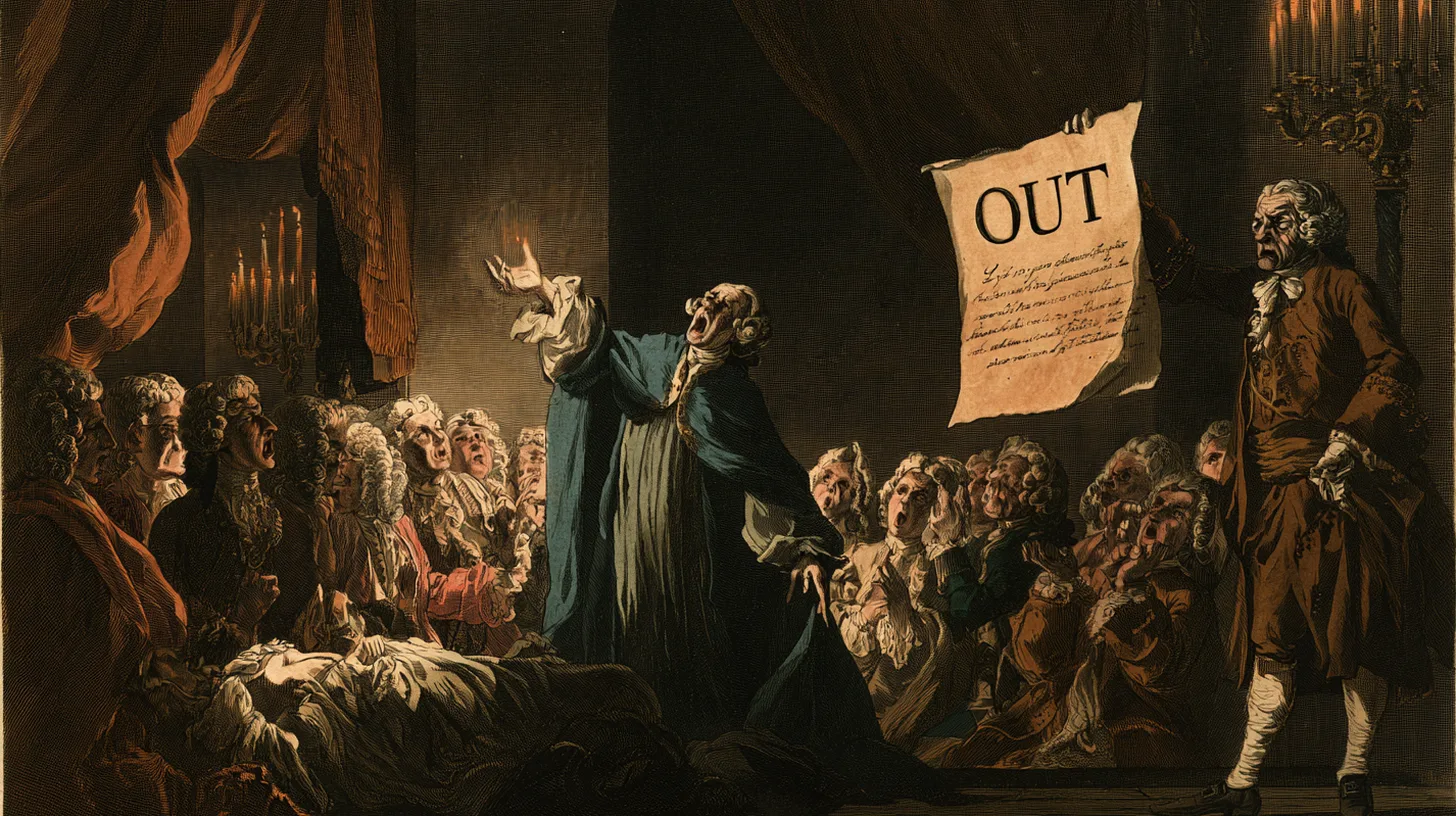
Ask who performed the famous exorcisms above and the same few names keep surfacing. These are the men who made casting out demons a career.
| Exorcist | Active | Known for |
|---|---|---|
| Johann Joseph Gassner | 1770s | Celebrity healer-exorcist banned by both emperor and pope |
| Theophilus Riesinger | 1900s–1941 | Capuchin friar who led the 1928 Earling exorcism |
| Malachi Martin | 1960s–1999 | Wrote Hostage to the Devil (1976) |
| Gabriele Amorth | 1986–2016 | Rome’s chief exorcist; co-founded the International Association of Exorcists |
| Vincent Lampert | 2005–present | Indianapolis exorcist fielding ~1,700 requests a year |
Johann Joseph Gassner was the eighteenth century’s superstar: thousands of the sick and the curious mobbed his healing-exorcisms across the Holy Roman Empire, until Emperor Joseph II expelled him from Regensburg in 1775 and Pope Pius VI condemned his methods the following spring. His rival Franz Mesmer explained the same cures with “animal magnetism”—which is why historians of psychiatry treat the Gassner affair as a founding episode in the prehistory of hypnosis.
The modern record belongs to Gabriele Amorth, exorcist of the Diocese of Rome for thirty years, who claimed 50,000 exorcisms in 2000, 70,000 by 2010, and 160,000 by 2013. The caveat is his own: most were repeat rites on the same sufferers, and he judged fewer than a hundred cases to be genuine possession. Russell Crowe played a loose version of him in The Pope’s Exorcist (2023). His successors are busier than ever—Indianapolis exorcist Vincent Lampert told The Atlantic he fielded 1,700 requests in a single year.
The trade is older and bigger than the Catholic Church, too: Japanese court diviner Abe no Seimei was performing exorcisms for emperors in the tenth century, nearly a millennium before Amorth was born.
FAMOUS EXORCISMS FAQ
What is the most famous exorcism in history?
The 1949 Roland Doe case is the most famous exorcism in history because it inspired The Exorcist. Jesuit priests performed the rites over roughly a month in St. Louis on a 13-year-old boy identified in 2021 as Ronald Hunkeler. Anneliese Michel’s fatal 1976 case is the most infamous.
Who is the greatest exorcist of all time?
By volume, Gabriele Amorth—Rome’s chief exorcist from 1986 to 2016—claimed 160,000 exorcisms, though he admitted most were repeat rites and fewer than 100 involved what he considered real possession. In his own era, Johann Joseph Gassner drew bigger crowds than any exorcist before or since.
Has a real exorcism ever been recorded?
Yes. On April 5, 1991, ABC’s 20/20 broadcast footage of a six-hour exorcism performed on a 16-year-old Florida girl called Gina, edited to a 26-minute segment watched by roughly 29 million people. Priests on camera claimed she nearly levitated; critics inside the Church called the airing indefensible.
When was the last exorcism performed by the Catholic Church?
Exorcisms never stopped—the Church performs them today. A Vatican-affiliated university in Rome has run an annual exorcism course since 2005, the International Association of Exorcists reported roughly 800 members by 2020, and U.S. bishops have trained new exorcists since a 2010 Baltimore conference.
Which famous exorcism cases have been debunked?
The three biggest all have holes. Courts established Anneliese Michel’s temporal lobe epilepsy and psychosis. Investigator Mark Opsasnick found no independent witnesses to anything supernatural in the Roland Doe case—the attending priest wouldn’t vouch for it. And Urbain Grandier burned at Loudun on a devil’s pact historians call an obvious forgery.