13 min read
Intel has had nine CEOs in 58 years.
The line starts with Robert Noyce, co-inventor of the integrated circuit, and currently ends with Lip-Bu Tan, the chip-design veteran hired in March 2025 to pull Intel out of the deepest slump in its history — a rescue so expensive that the United States government ended up buying a tenth of the company.
LIST OF PRESIDENTS & CEOS OF INTEL
| CEO | Tenure | Claim to fame |
|---|---|---|
| Robert Noyce | 1968–1975 | Co-founder; co-invented the integrated circuit |
| Gordon Moore | 1975–1987 | Co-founder; author of Moore’s Law |
| Andy Grove | 1987–1998 | Bet the company on microprocessors |
| Craig Barrett | 1998–2005 | The manufacturing disciplinarian |
| Paul Otellini | 2005–2013 | Won the Mac, passed on the iPhone |
| Brian Krzanich | 2013–2018 | Resigned over a workplace relationship |
| Bob Swan | 2019–2021 | The reluctant CFO (interim from June 2018) |
| Pat Gelsinger | 2021–2024 | The comeback that ran out of time |
| David Zinsner & Michelle Johnston Holthaus | 2024–2025 | Interim co-CEOs |
| Lip-Bu Tan | 2025–present | The turnaround, with Washington as a shareholder |
ROBERT NOYCE (INTEL’S FIRST CEO)
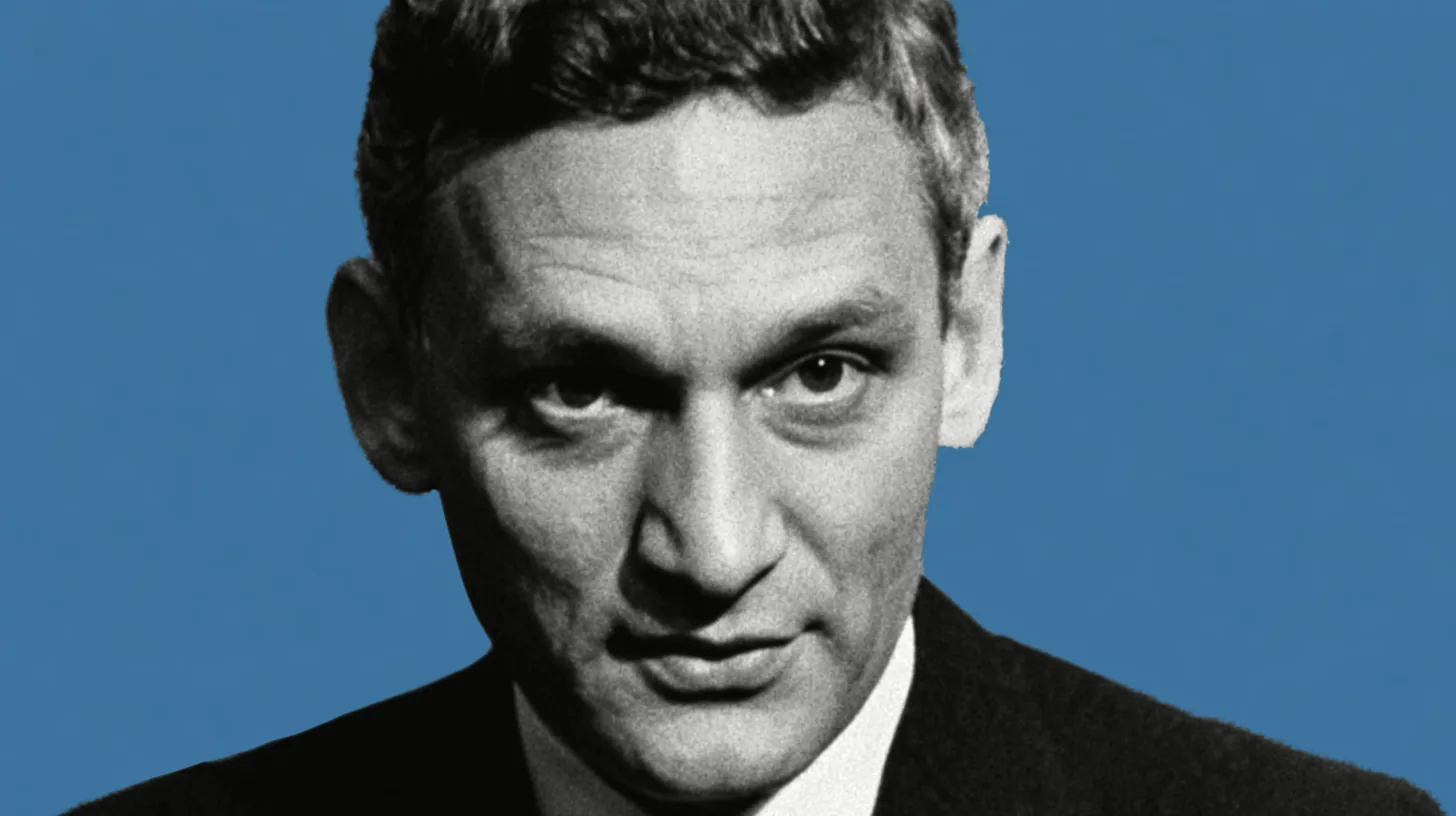
Robert Noyce was Intel’s first CEO, running the company from its founding in July 1968 until 1975.
Noyce and Gordon Moore had already co-founded Fairchild Semiconductor in 1957, and Noyce had already co-invented the integrated circuit. When the pair walked out of Fairchild, venture capitalist Arthur Rock raised their startup money off a one-page business plan. Their first hire was a young engineer named Andy Grove.
The Noyce years produced an absurd share of computing’s foundations: the 1103, the first commercially available DRAM chip, in 1970; the 4004, the first commercial microprocessor, in 1971; and the 8080, the chip that would power the Altair 8800, in 1974. Intel went public on October 13, 1971 at $23.50 a share, raising $6.8 million.
Noyce ran the place like the opposite of a corporation — no reserved parking, no executive suites, open cubicles — a flat style that became Silicon Valley’s default culture. They called him “the Mayor of Silicon Valley.” His advice to a young engineer became the company’s unofficial creed: “Don’t be encumbered by history. Go off and do something wonderful.”
GORDON MOORE (CO-FOUNDER OF INTEL)
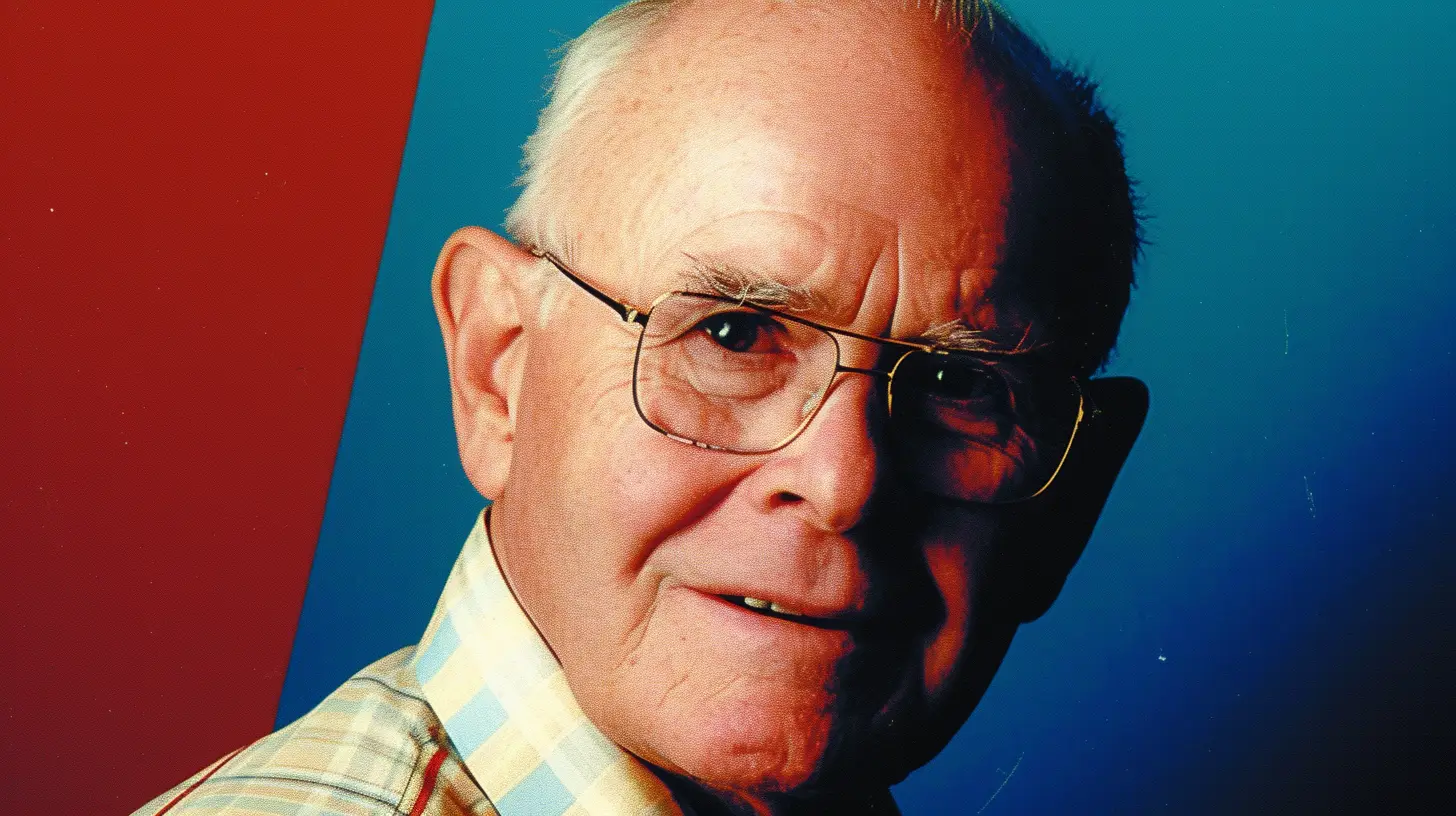
Best known for Moore’s Law, Gordon Moore co-founded Intel and became CEO in 1975.
Seven years earlier, he and Robert Noyce had founded the company together. When Noyce moved up to chairman in 1975, Moore became Intel’s second CEO — president and CEO at first, then chairman and CEO from 1979 until he handed the top job to Andy Grove in 1987.
Moore pivoted Intel hard toward mass-producing microprocessors. His name was already on the industry’s yardstick: in an April 1965 Electronics article, he had observed that the number of components on a chip kept doubling on a predictable clock — an observation Caltech professor Carver Mead later christened “Moore’s Law.”
Moore built up Intel as the world’s preeminent chipmaker.
ANDY GROVE
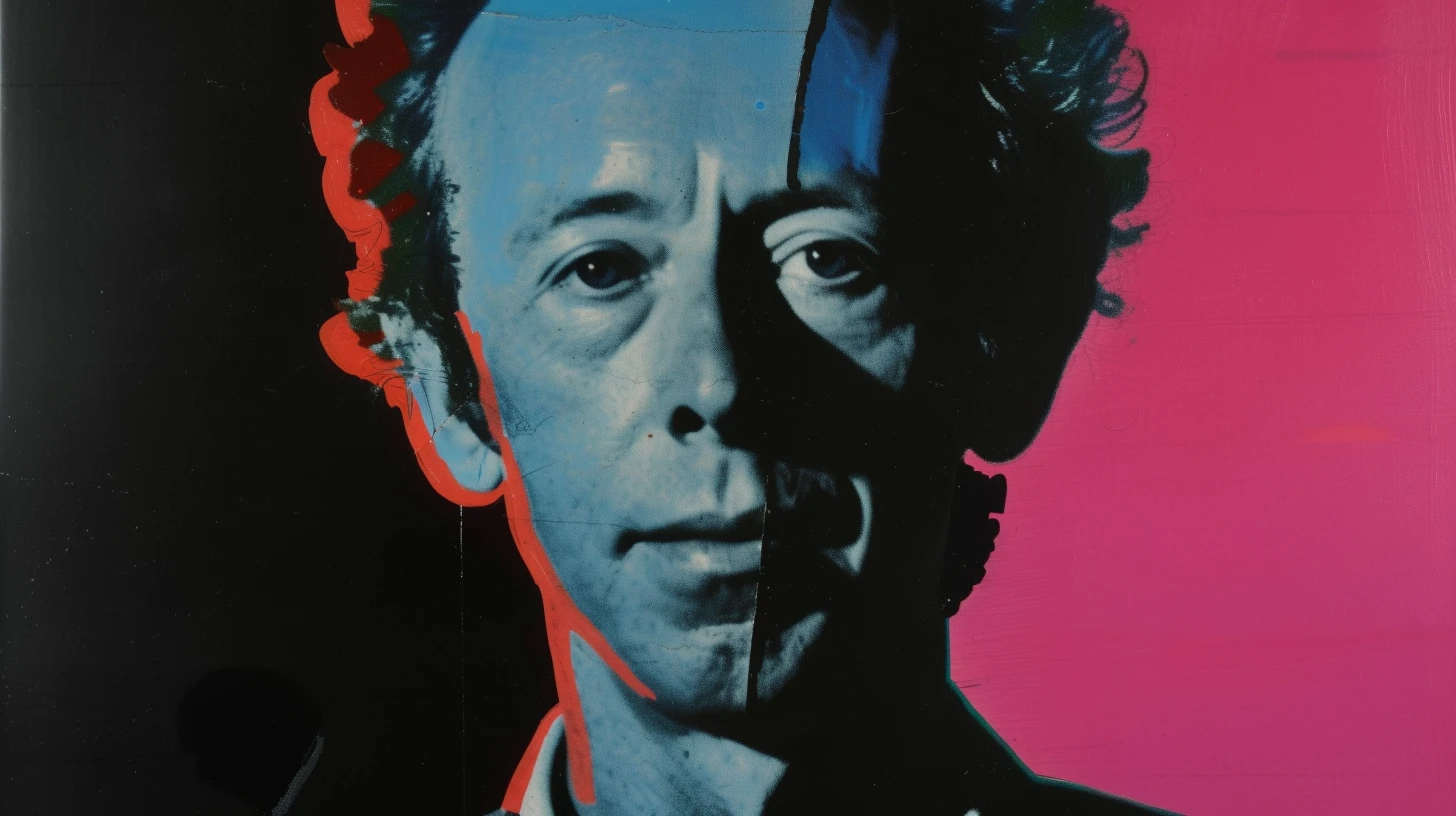
Andy Grove ascended to Intel’s presidency in 1979.
He later became the tech giant’s CEO in 1987. Grove had been Intel’s very first hire in 1968, and he steered the company through the dawn of the PC age with a famously intense management style.
His defining move came before the CEO title did. In 1985, with Japanese manufacturers destroying Intel’s memory-chip business, Grove asked Moore what a new CEO would do if the board replaced them. Moore answered that he’d get Intel out of memories. Grove’s reply — why don’t we walk out the door, come back, and do it ourselves? — became the most retold story in the company’s history, and the thesis of his 1996 book Only the Paranoid Survive. Intel left memories behind for good, and the business it walked away from was eventually dominated by Samsung, which came to hold 31% of the global memory-chip market.
The bet worked. Riding Microsoft’s Windows boom, Intel became the world’s largest chipmaker, and revenue grew from $1.9 billion to more than $26 billion across Grove’s CEO tenure, which ran until 1998 — not 1997, as many lists have it. Time named him Man of the Year in 1997.
CRAIG BARRETT
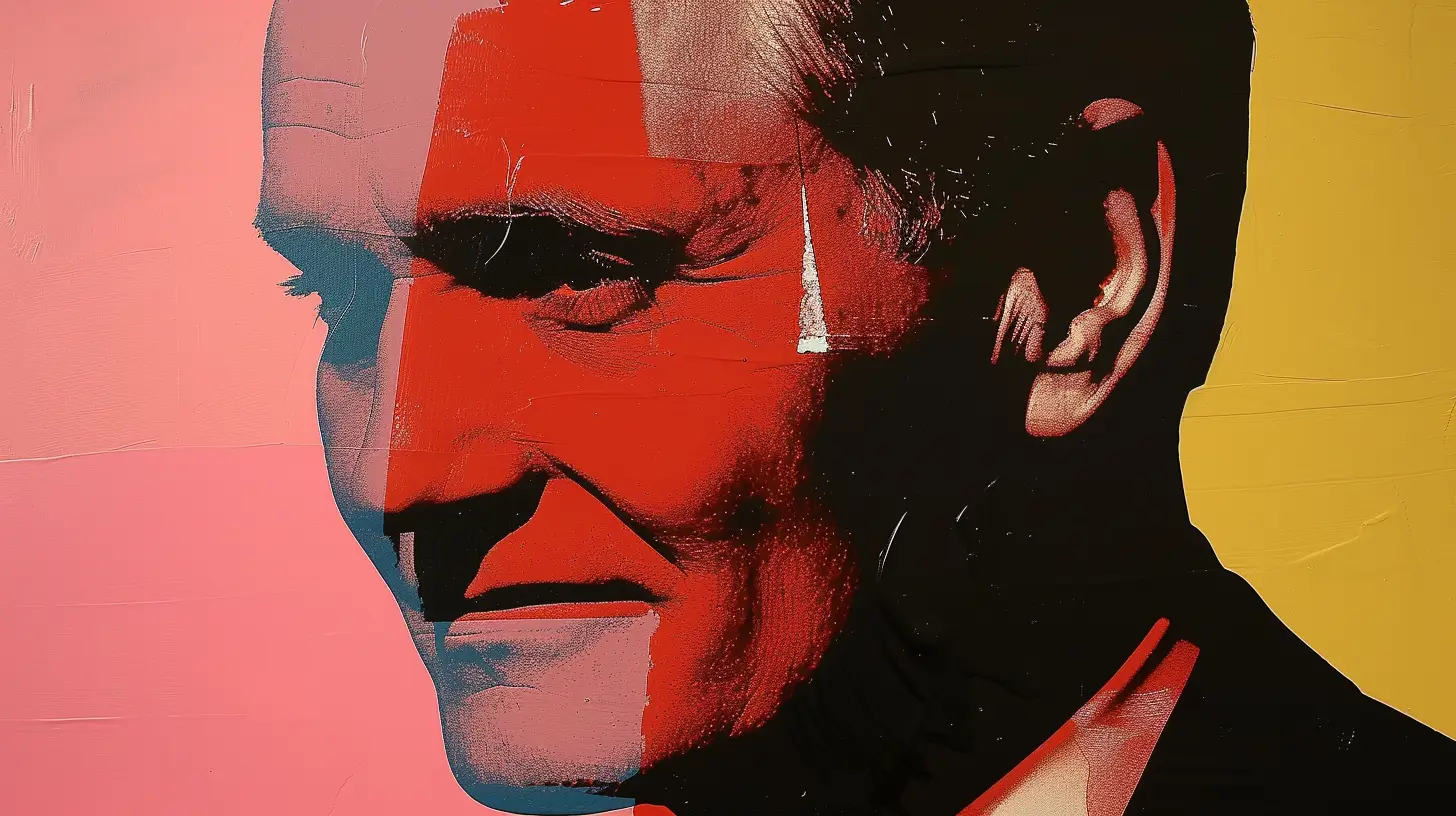
Craig Barrett became Intel’s President in 1997.
Barrett came equipped with expertise in technology and business strategy, which primed him to assume the company’s role as CEO in 1998.
A former Stanford materials-science professor, Barrett was the manufacturing man — his “Copy Exactly” doctrine required every Intel fab to replicate a proven factory down to the paint on the walls, and it made Intel’s manufacturing the envy of the industry.
He guided Intel into the 21st century, and Barrett diversified the company’s offerings beyond microprocessors and helped shepherd its finances through the dot-com bubble.
Many people rightly criticize him for failing to establish Intel’s dominance of the mobile computing revolution.
PAUL OTELLINI
Veteran Intel executive Paul Otellini had over 30 years of experience at the company before being named President and Chief Operating Officer in 2002.
Otellini took over as Intel’s fifth CEO in 2005. He was seen as a safe choice. He was also the first Intel CEO without an engineering background.
Otellini oversaw a period of solid financial returns. Helping to establish the company as integral to the growth of cloud computing and data centers. He won Apple’s Mac business away from PowerPC in 2005 — and then made the miss that haunts Intel to this day, turning down the chip contract for the original iPhone because Apple wouldn’t pay enough per chip.
“We ended up not winning it or passing on it, depending on how you want to view it,” Otellini admitted in his 2013 exit interview with The Atlantic. “And the world would have been a lot different if we’d done it.”
During his tenure, Intel dominated the PC market — while the smartphone market it passed on grew into the largest chip market on Earth.
BRIAN KRZANICH
As a veteran Intel engineer, Brian Krzanich leveraged his extensive technical expertise to rise and become Chief Operating Officer in 2012.
Everyone saw him as an operation guru. Somebody who could execute Intel’s strategies. He’d soon be tapped to become the sixth CEO in Intel’s history in 2013.
Krzanich’s tenure was marked by high-profile stumbles — above all the years-long delays getting Intel’s 10-nanometer chips into production, which handed rivals the manufacturing lead Intel had held for decades.
He resigned on June 21, 2018, after an internal investigation found that a past consensual relationship with an Intel employee had violated the company’s non-fraternization policy.
BOB SWAN
Bob Swan is the answer to a question people still ask constantly: who was Intel’s CEO before Pat Gelsinger?
Bob Swan joined Intel as Chief Financial Officer in 2016 after stints at eBay and General Atlantic. At eBay he had spent nine years as CFO and helped oversee the PayPal spinoff.
He was named interim CEO the day Krzanich resigned — and spent months telling anyone who asked that he didn’t want the job permanently.
The board talked him into it anyway. “I jumped at the opportunity to remove ‘interim’ from my title,” Swan said when Intel made him its seventh CEO on January 31, 2019. He held the job for two years, until the board brought back Pat Gelsinger in February 2021.
PAT GELSINGER
Pat Gelsinger’s return to Intel as CEO in 2021 was a fairly large shift for the semiconductor giant.
He believed in reviving U.S. chip manufacturing and restoring Intel’s technological leadership.
However, his tenure saw significant challenges:
- Intel’s stock lost roughly 60% of its value
- the company lost crucial market share to competitors like Nvidia
- and costly restructuring efforts failed to deliver results
The board’s confidence eroded as Intel struggled, particularly in the AI sector — the same wave Sundar Pichai had already spent years reorienting Google around.
Even the CHIPS Act money underlined the strain: the $8.5 billion grant announced in March 2024 was finalized at $7.86 billion that November, days before his exit, while Intel’s planned German mega-fab sat on indefinite pause.
Faced with a board ultimatum in December 2024, Gelsinger chose retirement.
He didn’t stay quiet about it. By 2026 — running the faith-tech platform Gloo as executive chair — Gelsinger was pointedly reminding interviewers that he had been Intel’s “first technical leader in essentially 15 years,” and taking aim at the finance-first era that preceded him: “When you’re making these hardcore technical decisions that affect billions of dollars, you don’t do that through a spreadsheet.”
DAVID ZINSNER & MICHELLE JOHNSTON HOLTHAUS (INTERIM CO-CEOS)
Intel appointed interim co-CEOs David Zinsner and Michelle Johnston Holthaus following Pat Gelsinger’s retirement.
Zinsner, who was Intel’s CFO, brought 25 years of semiconductor industry experience.
Johnston Holthaus, a 30-year Intel veteran, led the company’s core product groups as CEO of Intel Products.
Frank Yeary served as interim Executive Chair while the board searched for a permanent CEO.
LIP-BU TAN
Lip-Bu Tan, Intel’s ninth CEO, was named to the job on March 12, 2025, effective March 18.
The former Cadence Design Systems chief arrived with a pay package valued around $69 million — nearly all of it in long-term stock — and a personal pledge to buy $25 million of Intel shares with his own money. “I came on board knowing full well this would be the most challenging job of my career, but also the most motivating and fulfilling,” he wrote to employees that spring.
The challenge was steep, and Tan’s medicine was harsh. In July 2025 he announced Intel would cut its workforce roughly 15% — from about 109,000 people toward 75,000 by year’s end — while scrapping planned fabs in Germany and Poland and slowing construction in Ohio.
Then politics arrived. On August 7, 2025, President Trump publicly demanded Tan resign over his decades of investments in Chinese tech companies. Four days later, after a White House meeting, Trump reversed himself entirely — and within two weeks the U.S. government owned a tenth of Intel.
The turnaround showed up in silicon and in the stock. Panther Lake, Intel’s first chip family on its make-or-break 18A process, launched out of Fab 52 in Arizona in late 2025. By June 30, 2026, Intel shares hit a record $142.35 — and the company posted $16.1 billion in revenue in the second quarter of 2026, up 25% year over year.
WHO OWNS INTEL NOW? THE U.S. GOVERNMENT’S STAKE
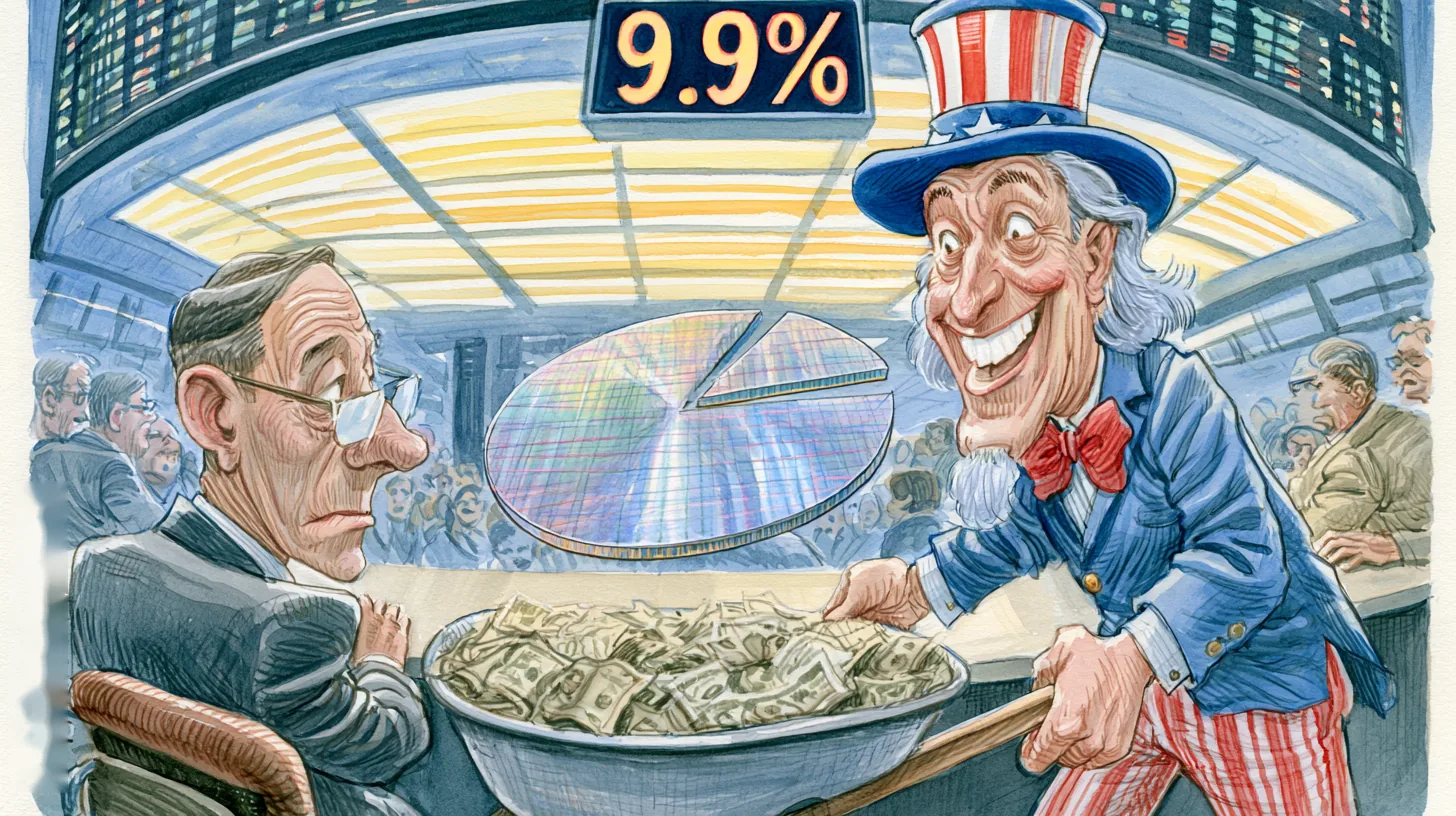
The U.S. government is now Intel’s largest single shareholder — a sentence no one would have believed when this post was first written.
On August 22, 2025, the Trump administration converted $8.9 billion in unpaid CHIPS Act grants and Secure Enclave funds into equity: 433.3 million shares at $20.47, a 9.9% stake. The stake is passive — no board seat, no governance rights — but it comes with a five-year warrant for another 5% if Intel ever gives up majority control of its foundry business. Where the Biden administration had written Intel a grant, the Trump administration bought the stock.
The government wasn’t alone. SoftBank invested $2 billion that same August, and in September 2025 Nvidia announced a $5 billion stake plus a partnership to build chips marrying Nvidia’s AI hardware with Intel’s x86 processors — making Intel’s fiercest modern rival one of its largest outside shareholders, alongside index giants Vanguard and BlackRock — the same two names that sit atop The Walt Disney Company’s shareholder table.
INTEL CEO HISTORY FAQ
What is Intel CEO Lip-Bu Tan’s salary?
Tan’s base salary is $1 million, with a bonus target of 200% of salary and roughly $66 million in long-term equity awards — a hiring package Intel valued at about $69 million in March 2025. He also committed to personally purchasing $25 million of Intel stock in his first 30 days.
Who was fired as Intel CEO?
Two departures qualify. Brian Krzanich resigned under pressure in June 2018 after violating Intel’s non-fraternization policy. Pat Gelsinger’s December 2024 exit was announced as a retirement, but it followed a board ultimatum after Intel’s stock lost roughly 60% of its value — most reporting described him as ousted.
How much money did Biden give to Intel?
The Biden administration awarded Intel $7.86 billion in direct CHIPS Act funding in November 2024, trimmed from the $8.5 billion announced that March. Only about $2.2 billion had been paid out before the Trump administration converted the remainder — plus Secure Enclave funds — into its $8.9 billion equity stake in August 2025.